
Is Your Shopify Store Invisible to AI Shoppers?
On March 24, 2026, Shopify made five and a half million stores discoverable inside ChatGPT, Copilot, and Gemini overnight. Being in the system and being recommended are two entirely different things.
Agentic commerce for Shopify merchants is not a future trend. AI-powered shopping orders on Shopify have already jumped 15x since January 2025. During the 2025 holiday season, AI-influenced interactions drove roughly $67 billion in global online sales. This is happening. The question is whether your store shows up when it does.
Most Shopify stores are not ready. Not because merchants missed a setting, but because the architecture of a typical Shopify store was built for human eyes — and AI agents do not see what humans see.
This page explains what agentic commerce Shopify merchants need to understand, where most stores are falling short, and what to fix first.
What "Agentic Commerce" Actually Means for Your Store
An AI shopping agent is not a chatbot that answers questions. A chatbot responds. An agent acts. When someone tells ChatGPT "find me a waterproof hiking jacket under $200, size medium, available for delivery by Friday," a shopping agent searches across stores, compares products, evaluates availability, and can initiate a transaction without the buyer visiting a single product page.
The buyer may never see your store. They see a recommendation from the AI, click through to your Shopify checkout, and buy. Or they do not — because the AI recommended something else.
What determines which outcome you get is almost entirely data quality.

Here is what happens technically when ChatGPT receives a shopping request today:
- The agent queries Shopify's Catalog, which aggregates product data from all eligible merchants
- It scores each matching product against the buyer's criteria: title match, attribute match, price, availability, reviews, shipping time
- It surfaces the top results — typically three to five products
- The buyer selects one and is redirected to the merchant's Shopify checkout
Step 2 is where most Shopify stores lose. Not because their products are wrong for the buyer, but because the agent cannot confidently match them.
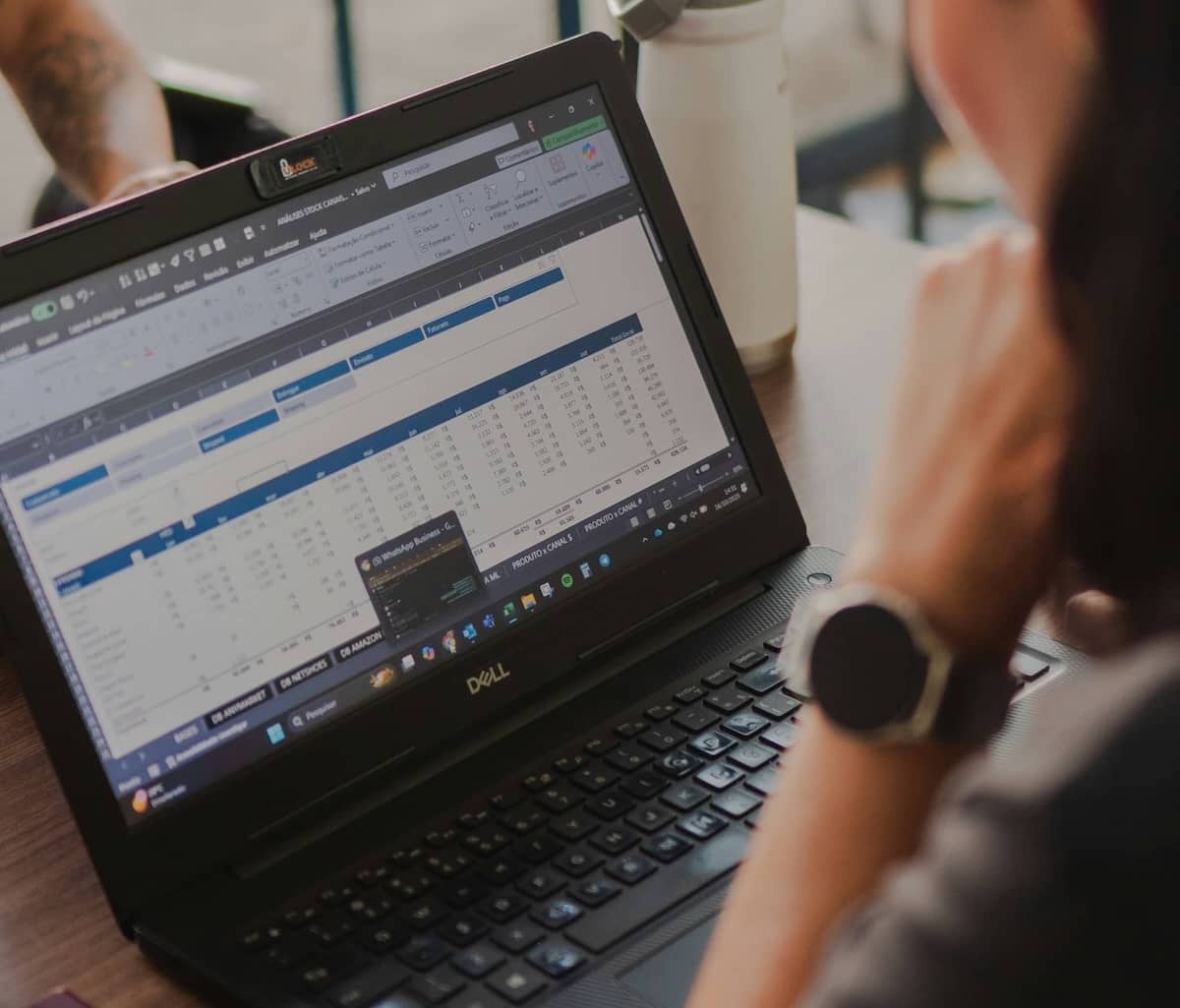
AI Agents Parse Data. They Do Not Browse Pages.
When you look at a Shopify product page, you see photography, brand voice copy, a compelling headline, and a "Buy Now" button. The visual design does real work — it builds trust, communicates value, and drives conversion.
AI agents do not see any of that. They read structured data: product titles, typed attribute fields, schema markup, real-time inventory feeds. If that underlying data is incomplete, vague, or locked inside JavaScript rendering, the agent moves on.
"A product called 'The Drift' tells an AI agent nothing."
Shopify's own enterprise team used this example: a product named "Ocean Breeze" is invisible to an agent looking for "texturizing sea salt spray." But rename it "Texturizing Sea Salt Hair Spray, 8oz, Volumizing, Medium Hold" and the match is exact. Same product. Completely different AI discoverability.
This is not an SEO renaming exercise. It is a fundamental difference in how your catalog is structured.
How to Optimize Shopify for AI Agents: 5 Factors That Matter
Stores with 99%+ attribute completion see 3 to 4 times higher AI visibility than stores with incomplete product data. Here is what attribute completion actually means in practice.
1. Literal, Attribute-Forward Product Titles
AI agents score products against search intent. A title needs to contain the product category, key specifications, and differentiating attributes — not a brand name or creative product line name. Under 100 characters is the practical target. "Merino Wool Running Socks, Ankle Cut, Size M, Anti-Blister" beats "The Fleet" every time.
2. Metafields Populated as Typed Data
Material composition, dimensions, weight, country of origin, compatibility, care instructions — these need to exist as typed metafield values in your Shopify admin, not embedded in prose descriptions. Agents query structured data. If the information only exists inside a paragraph, it is functionally invisible to them.
3. Schema Markup on Every Product Page
JSON-LD Product schema tells AI parsers exactly what your product is, what it costs, and whether it is available — without requiring them to render your JavaScript. Offer schema with real-time pricing, AggregateRating schema, and ProductGroup schema for variant products are the priority additions.
4. Accurate Real-Time Inventory
AI agents check stock status when they evaluate products. If your inventory sync has any lag — even a few hours — you can appear as out-of-stock during the agent's query and be excluded from results. For stores with high SKU counts or third-party fulfillment, this is often the first thing to audit.
5. Guest Checkout Enabled
This is a Shopify Catalog eligibility requirement. If guest checkout is disabled, buyers coming from AI channels cannot complete a purchase — which means the agent will not recommend you for transactional queries. Check this in Settings → Checkout → Customer accounts.
Why Shopify's Architecture Gives You an Advantage
Walmart ran an experiment with in-chat purchasing — completing transactions entirely inside ChatGPT without redirecting buyers to Walmart's own site. The result: in-chat purchases converted at one-third the rate of transactions that redirected to Walmart's own checkout. Walmart ended the arrangement in March 2026, the same week Shopify launched Agentic Storefronts.
This is not a coincidence. Shopify designed Agentic Storefronts to redirect buyers to your Shopify checkout — not to complete transactions inside the AI chat. That architecture decision means your existing checkout, conversion rate optimization setup, and abandoned cart flows still apply to AI-originated traffic. The agent brings the buyer to your store. What happens after that is still yours to control.
This points to a specific friction hierarchy for AI agent traffic that differs from organic search traffic:
- Incomplete product data — agent skips your product before the buyer ever sees it
- Inaccurate inventory — agent moves to the next available option
- Guest checkout disabled — agent cannot recommend you for purchase-intent queries
- Slow checkout load time — agent may return an error or timeout
- No reviews or trust signals — agent deprioritizes against comparable products with social proof
The first two failures happen before the buyer is involved. You do not get a chance to convert someone who never saw your product in the results.
What to Check Right Now in Your Shopify Admin
Before running a full data audit, there is a 10-minute check that tells you whether you are even eligible for Agentic Storefronts.
Go to Settings → Sales channels and look for Agentic Storefronts. If it appears and is enabled, your store has passed the baseline eligibility check: you are on a paid Shopify plan, your storefront is not password-protected, you offer US or Canada shipping, and guest checkout is allowed.
If it does not appear, you have an eligibility issue to resolve before any further optimization matters.
Once eligibility is confirmed, open ChatGPT, Perplexity, or Google AI Mode and search for something you sell. Be specific. Use the kind of search a customer would make. If your products appear, look at how they are described — that is what your product data looks like to an AI agent. If they do not appear, you know where the work starts.
A merchant selling kitchen tools ran this test and found a competitor's near-identical spatula appearing first. The competitor's product title was "Silicone Cooking Spatula, Heat-Resistant to 600F, BPA-Free, 11-inch." Her own was "The Turner." Three words. She updated six titles in a single afternoon and reran the test the next day. Two of them surfaced in results. This is the level of change that moves the needle. It does not require a developer.

What a Full Readiness Audit Covers
If the basic check reveals gaps — missing attributes, products not showing up, titles that are not literal enough — a systematic audit works through the store in four areas.
Product Data Audit
A catalog-level review of title structures, metafield completion rates, description content, and variant data. For stores with more than a few hundred SKUs, this is the most time-intensive part. The output is a prioritized fix list, starting with the highest-revenue products.
Schema Markup Implementation
Adding or correcting JSON-LD structured data across product, collection, and FAQ pages. This requires theme-level code changes and should not be done without testing — incorrectly implemented schema can trigger Search Console errors that affect organic rankings alongside AI discoverability.
Generative Engine Optimization
GEO is different from traditional SEO. AI agents weigh brand consistency, review volume, and authoritative content — buying guides, FAQ pages, comparison pages — when choosing between comparable products. A store with well-written product category guides, a populated review corpus, and accurate About and Policy pages is more trustworthy to an AI agent than an identical store with none of those signals.
Attribution Setup
AI-originated orders show up in Shopify Analytics as referral traffic from the relevant AI platform. Setting up UTM parameters or checking the traffic source breakdown in Analytics → Reports → Sessions by referrer tells you whether AI channel traffic is already showing up and at what volume.
If you want a professional assessment of all four areas before committing internal resource to fixes, a Store Health Audit covers catalog eligibility, product data completeness, schema markup, and checkout friction as part of its standard scope. Fixed price, 72-hour delivery, prioritized action plan.
Frequently Asked Questions
Is Agentic Storefronts enabled by default or do I have to turn it on?
It is opt-in. Go to Settings → Sales channels → Agentic Storefronts and enable it. You also need to be on a paid Shopify plan, have an unpassworded store, offer shipping to the US or Canada, and allow guest checkout.
I already have good SEO. Does that help with AI discoverability?
Partially. Strong product titles and structured content overlap with both SEO and AI readiness. But traditional SEO optimization and optimizing Shopify for AI agents are not identical tasks. SEO rewards natural language and topical authority. AI agents reward structured attribute data, real-time inventory accuracy, and typed metafield completion. A well-ranked store on Google can still have significant gaps for AI agent readiness, particularly in the metafield and schema areas.
What does Shopify charge for orders that come through AI channels?
Standard Shopify transaction fees apply. There is no separate charge for Agentic Storefronts traffic or AI channel orders.
What if I do not want my products in ChatGPT?
You can disable Agentic Storefronts in Settings → Sales channels at any time. Individual products can also be excluded from the Shopify Catalog feed if needed.
The Window Is Still Open
The Shopify Agentic Storefronts launch happened weeks ago. The merchants who fix their product data quality, complete their schema markup, and get their stores into proper catalog shape now will hold a positioning advantage over the majority who optimize after the channel matures. AI-powered shopping orders on Shopify jumped 15x since January 2025. That is not a projection. It is already in the data.
Sources: Shopify Agentic Storefronts · Shopify Help Center · Shopify Enterprise Blog